Hitting $7M+ ARR thanks to the pressures of
bootstrapping
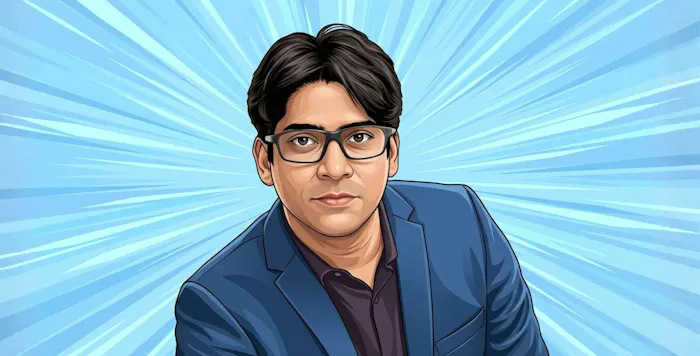
Sameer Narkar bootstrapped Konnect Insights to over $7M million ARR and found that, despite the obvious disadvantages, bootstrapping was his greatest superpower.
Here's Sameer on how he did it. 👇
Finding the problem
I studied Electronics and Telecommunication Engineering, and like most engineers, I chose software development as my first career. I started my career writing code in finance. Interacting with those clients, I discovered how large enterprises struggle with fragmented customer data. Brands used 4 to 5 different tools to manage customer experience. One for social listening. One for ticketing. One for analytics. None of them talking to each other.
That insight planted the seed for Konnect Insights.
I founded Konnect Insights over a decade ago. Today, 500+ enterprise brands across 30+ countries use Konnect Insights, an AI-powered omnichannel CX platform where brands can listen, respond, and make smarter decisions across every customer touchpoint. It offers social listening, omnichannel ticketing, social CRM, analytics, and AI, all under one roof.
We are a B2B SaaS platform with annual subscription contracts. Pricing is modular; brands pay based on the products they use, the channels they connect, and the scale of their operations. No one-size-fits-all. We scope and price enterprise deals to fit.
We fully bootstrapped it. We're currently at $7M ARR, and we're on track to cross $10M ARR this year with a team of roughly 150.
Initial challenges
There were a lot of challenges in the beginning. Building the initial product took a lot of grit.
Lack of money - We had no external funding, so we built software for finance clients through side projects, leveraging contacts from my earlier career. Consulting revenue funded the product.
Servers: Cloud infrastructure costs money. In the early days; we lacked funds. So we started small, scaled only as revenue allowed, and made every penny count.
Team: We couldn't hire experienced developers, so we hired freshers. However, I was lucky (beginner's luck); the interns were exceptional! We trained and backed them, and many grew into the company's backbone.
Getting first clients: Like any startup, we faced this challenge. Our product wasn't up to the mark in the early days, we lacked credibility, and we were learning sales and other aspects in the field, making mistakes and improving. We innovated and partnered with marketing agencies to open enterprise doors for us.
Each challenge taught us something.
Bootstrapping is a superpower
That said, staying bootstrapped has been a huge advantage. It sounds like a constraint, but it's a superpower.
Every decision is grounded in reality.
No vanity metrics: LTV, CAC, Rule of 40 are useful, but they don’t drive our decisions
No runway anxiety
No investor pressure to grow at all costs.
Just building something people pay for and value. And we think long term, optimizing for durability, not the next funding round.
That focus is the biggest advantage we have.
The stack
As far as how we built it, we use:
Microsoft stack for front-end applications
.NET Core and SQL Server for client applications
Big Data for the search engine
Elasticsearch for MCP
And for various modules: Kafka, Solr, and Redis
Growth via product obsession
No matter how great your marketing, ads, and PR are, you will fail if the user experience doesn't support them when people first use the product and use it day in, day out.
Product obsession and excellence lead to word of mouth, which brings initial success in the early days.
Today, growth runs on three tracks:
Direct sales. A focused team targets enterprise brands across 27 B2C industries. High-touch, consultative selling is our mantra.
Partnerships. We have built a structured partner ecosystem across CCaaS providers, ISVs, resellers, and CX consultants. We treat partners as extended AEs with their own book of business.
Product-led retention. Our best growth lever is customers who expand. When a brand starts with social listening and sees the value, they add omni-channel ticketing, then CRM, then AI, then KRC (CX-Intelligence). The platform compounds.
If I started over? I'd invest in sales and marketing much earlier. We were product-first for too long. The product was great, but not enough people knew it existed.
Good advice
Here's my advice:
Keep things simple and enjoy the process. Only when you love what you are doing will you succeed.
Don't think too far ahead.
Don't read a lot of funding news.
Focus on building a great product and do a lot of research.
Use AI wisely — AI can get things done faster, but use your own wisdom.
Read a lot.
Listen to your customers carefully. However, decide your own product roadmap. Never build something just for one or two customers.
Be smart with your GTM strategies; many ways to succeed exist, especially if established players can open doors for you.
Hire the best people and nurture them.
And enjoy your life and have a lot of fun.
What's next?
Short-term, our goal is to:
Reach $15 million ARR. Fast. Build the best CX platform for brands.
Continue to build a product we are proud of, and that our customers proudly refer to everyone.
Continue to work towards our customers' success.
Act in the best interest of our partners and our team.
Keep learning what's new and leverage technology effectively.
Keep enjoying the journey.
And the rest will follow.
You can connect with me on my personal LinkedIn. Or follow along on Konnect's website and socials: X, LinkedIn, YouTube, and Instagram.

Leave a Comment
Really interesting perspective on how bootstrapping created better discipline and decision-making early on. The point about focusing on customer value instead of chasing growth at any cost probably explains why the business scaled sustainably to $7M ARR. looking back, was there a specific growth channel or decision that had the biggest long-term impact?
The bootstrapping-as-superpower framing really stuck with me.
Most founders treat it as a badge of suffering - "we survived without funding"., but Sameer flipped it: no runway anxiety, no vanity metric pressure, just building something people actually pay for.
That's a fundamentally different operating mode.
The part about being product first for too long also hit close to home. It's such a common trap , the product is genuinely good but the GTM is an afterthought.
The insight that "not enough people knew it existed" is basically a distribution problem, not a product problem.
Quick question for Sameer - at what ARR milestone did you feel confident enough to start investing seriously in sales and marketing?
Was there a number where it clicked that the product could fund real GTM, or was it more of a forcing function from a specific deal or partnership?
The pressure of bootstrapping forcing better decisions is so real — when you don't have VC cushion to fall back on, every hire and product choice becomes way more intentional. Curious how you handled the scaling pressure when the revenue started picking up but you were still self-funding everything?
"when you don't have VC cushion to fall back on" reminded me of Dark Knight Rises - you jump out of the pit without the rope :) Regarding the scaling: our GTM was very partner focussed, so when we invested in a new market with our teams we ensured we break even in that market.. A little slow process to start initially but if executed well it gives very high returns
“How did you get your first users? I’m working on a similar SaaS and struggling with initial traction.”
In our early days I used to work about 14 hours a day. Mornings were for meetings, I hired one intern whose only job was to call and fix up meetings, mostly with marketing agencies already using established products in our space. Evenings I was coding myself.
As coders/ developers I know we hate meeting people but we have to gradually get over that and meet a lot of people. Just a lot of conversations.
My advice, know exactly who your right target audience is and meet as many of them as possible. Those conversations will not only shape your product but will also give you your first few customers.
the "product-first for too long" line is hitting at the right time for me. I'm 18, just launched my first real solo iOS app on TestFlight last week. instinct was to keep polishing until it felt "ready", but I forced myself to put it in front of strangers before retention was validated.
biggest surprise so far: the GTM work has actually shaped the product more than another month of building would have. one beta tester sent 3 days of unprompted notes that exposed a problem with the AI tone I would never have caught alone. 24 hours later, I'd shipped fixes, pushed a new build, and learned something I couldn't have learned by writing more code.
your regret about waiting is real, but the inverse is also true, selling early forces you to learn what to build. the cost of being product-first too long isn't just lost revenue, it's lost calibration.
curious: when you finally pushed harder on sales/marketing in year X, was there a forcing function (cash crunch, competitor moving, customer asking) or did you just decide "this has to change now"?
Wow, you are just 18 ! and launched your first app.. This is great.. keep up the good work. If you persist with what you are doing then in 3-4 years you will go a long way. Don't think too far. Just get some more users using your app and things will follow
This is one of the most honest bootstrapped success stories I've read. $7M ARR, zero funding, started with side projects just to fund the product — that's pure grit. Really appreciate you sharing the early struggles, not just the wins.
Thank you Jaisree
“Interesting take!”
7M ARR, I can only dream of. Amazing job!! Going back to your advice, how do we not "think to far ahead" when building. As a founder currently building, I can't stop imagining the future of the product, the potential, the possibilities. How did you over come those thoughts? How does one keep things simple while still believing our product should be the best?.
well early days, it is all about having the product which is a right fit for the market.. so you really keep pivoting. Just like in Chess, you don't think too far but 2-3 moves at the max.. It's somewhat similar till you have a first few customers and paying you well.
this is super inspiring. thanks for sharing!
Starting a decade ago, takes a lot of effort compared to today. Thanks for sharing your insights and guiding us on the process.
Thanks Amit.. well building things fast might be easy today.. But I guess the challenges still remain when it comes to sales and the market adopting your product.
"Pressures of bootstrapping" — this is underrated as a forcing function. Constraints make you focus on revenue-generating features instead of nice-to-haves. What was the first feature you cut that you thought was essential but turned out not to matter to customers?
They require completely different skills and most founders only develop one of them naturally
Thank you Raj
Wow! I'am really impressed by this story!
I've been bootstrapping my own project since 2022 and it's really hard...
I even started thinking that I needed to raise investment to survive anyway. This story just reminds that a business can successfully work on its own.
It is super supportive to me, thank you for sharing!
Thank you Julia! And keep going. 2022 to now is already a solid journey.
The hardest part of bootstrapping is the self-doubt, not the money. The money problem you can always find a way around (and perhaps, you know it better because its been 4 years now!)
You've got this!
Bootstrapping to $7M is inspiring. I'm also bootstrapping my own thing – TrendyRevenue, an AI tool that validates startup ideas before you build them.
Your point about 'product-first for too long' hits close. I built my first product without validation, wasted 6 months, $0 revenue. That's literally why I built TrendyRevenue – to stop myself and others from making that same mistake. It analyzes market demand, competitors, and revenue potential in seconds.
Question: At what point did you know your product was 'good enough' to start pushing sales harder? I'm at that decision point – tool works, but when do you stop tweaking and start selling?
Also, 'never build for one or two customers' – learned that the hard way. Thanks for the wisdom."
bootstrapping really does force you to build things people actually use
i’m noticing that on a much smaller scale right now — built a simple JSON tool for myself, and the only things that stick are the ones people actually come back to without any push
feels like that same principle just compounds at scale
curious — was there a specific moment where you realized retention was “strong enough” to double down?
Bootstrapping forces you to focus on real customers and real revenue
there’s no room for vanity growth
but getting to $7M this way usually means strong fundamentals especially distribution
it’s less about bootstrapping being better
more about building something people actually pay for, consistently
Thank you! And yes, Bootstrapping is not the point. Building something people consistently pay for is.
That's really awesome. I would love to hear more from you in future.
Sure, Thank you !
Do you think there will be a role for (non dev coding/background )AI prompt specialists in your company or in relevant industries in coming years? I have no dev background and built a fully functioning benchmark product. I feel like the skillset of knowing how to leverage AI is really valuable in today's business landscape. It is a tough skill to evaluate, I have zero AI certifications for example. I'm not looking for a job, just curious if you think there is potential in this niche?
Okay, here is my honest opinion (and I say this with respect)
AI is a layer that sits on top of something real. The products that succeed have defensibility, whether that is data, deep context, or functional industry knowledge. A product built purely on vibe-coding can be replicated by anyone tomorrow.
The real power of AI is that it helps genuine sofware developers move dramatically faster. What took months now takes days. That is a massive unlock.
But AI alone will not help someone without functional depth or technical grounding build platforms that scale and sell at enterprise level. The barrier has lowered, but it has not disappeared.
The skill you are building is valuable. Just make sure it sits on top of something deeper.
As an aspiring entrepreneur and serial project creator, seeing this makes me feel safe and give me a goal to further pursue my dreams. Bootstrapping is the way to go !
Thank you! believe in yourself, stay focused on real customers, and enjoy the journey
Looking at bootstrapping as a force that helps you to excel rather than a constrain that gives you anxiety about the competition and the people who are sitting on pile of cash is a great way to look at it.
I'm a non technical guy who's trying to build something technical without any major capital at hand. And looking at stuff like this gives me so much inspiration.
The platform compounds line under growth via product-led retention is the actual story behind the $7M number social listening expands to ticketing expands to CRM expands to AI. That’s not a pricing strategy, that’s an architecture decision made early that made expansion natural instead of forced. Most founders think about pricing tiers. The more durable move is designing the product so the next thing a customer needs is the next thing you already built. The ‘invested in sales and marketing much earlier’ regret is the one I keep seeing from bootstrapped founders who made it. Product obsession gets you to product-market fit. Distribution obsession gets you to $7M ARR. They require completely different skills and most founders only develop one of them naturally.
Validating GreenMate: An AI-powered companion for plant lovers worldwide. Would you use this?
Hi Indie Hackers,
I’m currently working on a concept called GreenMate, a mobile application designed to solve the most common challenges for urban gardeners and plant lovers globally.
The Vision:
Many people want to start gardening but feel overwhelmed by not knowing which plants suit their environment or how to treat a sick plant. GreenMate aims to be a one-stop solution.
Key Features:
AI Diagnosis: Instant health checks and care guides for your plants using AI.
Global Nursery Finder: An interactive map to find local nurseries and gardening supplies anywhere in the world.
Community Hub: A place to connect with fellow gardeners and share knowledge.
Why I'm here:
I want to build something that people actually need. Before I go full-scale with development, I want to hear from this community.
Does this problem resonate with you or someone you know?
What feature would make an app like this a "must-have" for you?
If you are a plant lover, what is your biggest pain point right now?
I’m really looking forward to your honest feedback and suggestions!
This resonated a lot. I think people often romanticize bootstrapping, but in reality it just forces you to figure out distribution fast.
The path from consulting → partnerships → enterprise makes sense, but I don’t see it broken down like this very often.
Curious, would you follow the same path if starting today?
Honestly, I refrain from using the word bootstrapping in customer conversations. We are a heavily funded company - funded by our customers' recurring revenue. That is the best kind of funding there is.
And yes, I would follow the same path if starting today
The framing of bootstrapping as a forcing function rather than a constraint resonates beyond the SaaS scale. On the tiny-indie end — I'm running a small Captio-style iOS memo app on the side, single-developer, no funding — the same dynamic shows up at 1,000x lower revenue: not having capital means I can't outspend my way out of an unclear ICP, so the cohort I serve gets defined by who replies to the support email, not by who I imagined when I shipped. Sameer's "we obsessed over the product because we had to" isn't separate from go-to-market; it IS the go-to-market when you bootstrap. The cheapest distribution channel is a product that one specific group actually misses when it's down. Curious — at what ARR did the bootstrapping discipline start to feel like a tax instead of an asset, if it ever did?
To answer your question honestly, it never felt like taxing. The discipline bootstrapping forces on you becomes part of your DNA.
When your customers start selling for you that is when you realise the constraint was never a constraint at all.
Sameer, the agency partnership detail deserves more airtime than it's getting in the comments.
The default rev-share model (20-30% to the agency) quietly destroys bootstrapped margins because the agency starts optimizing for their own retention, not the client's outcome. Your "no commission, keep the direct relationship" framing flips that. Agency wins on their fees, you win on retention, client never feels squeezed in the middle. It's a structural edge funded competitors can't copy without rewriting their CAC math.
On the "invest in marketing earlier" regret, I'd push back gently. The years of being product-first probably built the retention curve that's now doing the heavy lifting. If you'd hired a VP Sales in year 2 with a wobbly product, you'd have churned enterprise logos and burned reputation across 30 industries. Bootstrappers regret it because the marketing arc feels obvious in hindsight, but the slow build was probably the moat itself.
One thing I'd love to hear more on: when you brought in agency partners, did you start with consultants who'd already hand-sold the product to a client, or did you go cold to new partners? That consultant-to-partner conversion path feels underdiscussed in B2B SaaS playbooks.
Great observations, thank you!
On the agency model, yes, keeping the direct client relationship was intentional. Clean, simple, and better for everyone long term. It all depends on how you communicate what is right for everyone and honestly work toward the success of all.
On marketing regret, you make a fair point. The product foundation we built in those early years is probably why we retain so well today. Maybe it was the right sequence after all.
On how we brought in partners, it was mostly warm. Agencies who had already seen the product work for a client were the easiest converts. Cold partner acquisition is a different game altogether and takes much longer to bear fruit. Having said that, we have experienced how things work in different parts of the world and you need to pivot depending on the region - common sense I believe :)
This is one of the clearest examples I’ve seen of bootstrapping forcing real distribution, not just discipline.
What stands out isn’t just the product evolution, but how early constraints pushed you into channels that actually convert — consulting → partnerships → enterprise sales.
A lot of founders focus on building something great first and “figuring out growth later”, but in your case, distribution seems to have been shaped from day one by necessity.
Curious: do you think Konnect would have found the same GTM motion if you had raised early, or do you think bootstrapping fundamentally shaped how you approached distribution?
Honestly, I am not a big fan of funding. It is very taxing to keep running behind the Angels and VCs in early days . Takes away the focus from building the product and winning your first-few customers. My way of looking at it was simple. Services companies never raise money and yet run perfectly good businesses. So why can't we run a side business, fund the product, and keep going until the product revenue breaks even?
And once you have a product that is genuinely one of the best, you leverage the partner networks of other ISVs globally and build your GTM motion.
Bootstrapping did not just shape our GTM. It shaped our thinking. And I would not change that.
That makes a lot of sense, especially the focus part.
It feels like the same kind of constraint applies on the product side too.
When you’re forced to stay close to what actually works, you end up stripping things down to the smallest loop that delivers value.
In my case, it’s been interesting to see that the core isn’t really the voting itself, but what happens right after — when people try to understand what their answer means relative to others.
It’s a very small interaction, but it either “clicks” immediately or it doesn’t.
Curious if you’ve seen something similar — where constraints didn’t just shape GTM, but actually sharpened the core product experience as well.
This is interesting. Curious, what was the biggest challenge while building this?
There are many challenges, as I already highlighted. The bootstrapped journey is about executing your plans despite the lack of money. So you have to be smart and ensure you do all the right things. Navigating through building the product, managing server costs, data costs, building your team, executing GTM strategies, all of this is part of the journey. And more often than not, it gives you immense satisfaction as you get through each one.
Really enjoyed this especially the early insight about fragmented customer data. Even today, we still see companies juggling multiple tools that don’t talk to each other, which creates huge inefficiencies.
The bootstrapping journey resonated a lot too. Building through consulting and staying disciplined with costs is something we’ve experienced as well while working on similar problem spaces around AI and custom software solutions.
We’ve actually seen a similar pattern with clients once systems start getting unified, decision-making improves dramatically.
Also agree with your point about being product-first for too long. Distribution really is everything once you have something that works.
Curious when you started scaling via partnerships, what was the biggest factor that made agencies trust and actively sell your product?
Great story, lots of practical takeaways here.
Thank you! And yes, the fragmented tools problem is still very real. That is exactly why we built what we built.
On partnerships, honestly the biggest factor was that we never treated partners as a channel. We treated them as an extended team. We invested in their success, trained them, gave them the tools to sell, and made sure their clients got real value. Trust came from that.
The moment a partner sees their client genuinely happy with your product, they become your best salespeople. No level of marketing can do that magic :)
This is one of the most grounded bootstrapping stories I've read on here. The point about bootstrapping being a superpower rather than a constraint really hit home — when every decision has to be grounded in real revenue, you build differently. No vanity metrics, no runway anxiety, just product and customers.
The part about hiring freshers and training them into the backbone of the company is something more founders should talk about honestly. Everyone says hire the best, but not everyone can afford the best at the start. What you described — hiring people with potential and investing in them — is actually a more durable way to build culture than poaching senior talent.
Congratulations on $7M ARR. The part about wishing you had invested in sales and marketing earlier is advice I am taking personally right now as I prepare to launch my own bootstrapped product today. Sometimes the best lessons come from people who already walked the road.
Thank you for sharing this honestly.
Thank you! And good luck with your launch, that's exciting.
On hiring freshers, I genuinely believe it is one of the best things we did. But there is a lot of effort and we need to nurture them. If they are fairly intelligent and have a right attitude they are your best assets.
On sales and marketing, start early. Do not wait for the product to be perfect. It never will be. The market feedback you get from selling early is what actually makes the product better.
Wishing you all the very best !
The hiring freshers and training them into the backbone of the company is something a lot of founders overlook. Everyone wants to hire senior people from day one but the reality is you cant afford them and half the time they bring baggage from previous companies anyway. People who grow with you from the beginning have a completely different level of ownership.
The regret about being product first for too long is real and I see this constantly. We run a 45 person mobile app agency and the clients who take off are almost always the ones who started selling before the product was perfect, not after.
One thing I am curious about, when you partnered with marketing agencies to open enterprise doors in the early days, how did that relationship actually work? Was it revenue share or just a referral arrangement?
Yeah. rightly said, sometimes hiring senior people comes with the baggage from the previous companies. Whereas, with freshers you can mould them into your culture.
Talking about our relationship with agencies, it was more of a win-win. they would win the services mandate if we support them with the platform. We didn't get into the commission model as our long term vision was to deal directly with the clients. And continue the relationship with the agencies so they win the services business.
The game analogy really resonates with me. When you start with no resources you can't skip the fundamentals — you have to actually learn how everything works because there's no shortcut budget to paper over the gaps.
I'm three weeks into bootstrapping a CLI training platform I built because I couldn't find anything that taught it the way I needed to learn it. No funding, no team, just figuring it out as I go. What I've found is that the constraint forces a kind of creativity that I genuinely don't think I'd have access to otherwise. Every decision has to be justified by reality, exactly like you described.
The line that hit me hardest: 'just building something people pay for and value.' That's the whole game right there.
Congrats on $7M ARR bootstrapped — that's the kind of story that actually means something.
Thanks Richard. Wishing you all the best with your startup
"Big congrats on the $7M! Bootstrapping really forces you to be obsessed with efficiency. I’ve noticed that when every dollar counts, you start looking at 'hidden' costs like AI API waste. I'm actually building a tool (BurnCheck) ( burncheck.github. io/burncheck/) right now just to help bootstrapped founders see where they're overpaying for models. Constraints truly are the best teachers for staying lean!"
Very inspiring to say the least.
Great breakdown especially the idea that bootstrapping forces real discipline.
The fragmented tools problem still feels very real today. I’m seeing the same issue around meetings and internal knowledge.
Also interesting that you’d invest in sales earlier feels like a common mistake for product-first teams.
Curious: what would you have done differently on the GTM side early on?
In hindsight, many things could have been different. But happy with how things are moving. The fun part is, the journey demands you to always stay ahead of the curve and keep enhancing the platform. These are the best times though, with AI empowering the product even further
Sameer, this is one of the best bootstrapping breakdowns I've read in a while. The way you turned the pressures into a superpower really hit home. It forced reality-based decisions with zero vanity metrics or investor pressure.
I loved the honesty on hiring freshers and interns early and turning them into the core team. Also the regret about not investing in sales and marketing sooner. We're building an assessment-first hiring platform right now and we're already feeling that classic product-first trap.
Quick question: when you finally ramped up the sales side, what was the biggest shift that unlocked the real growth?
Congrats on hitting 7M+ ARR and heading to 10M. Really inspiring.
Thank you, Chandra. As far as our sales team is concerned, we are still a small team with 1-2 sales leaders in each region across about 7 countries. What works well for us is our ISV relationships and partners. That is the part of our GTM that truly delivers, and we help them grow too.
Hiring the sales team is tough though.. and you also need some luck to hire the best. Our learning has been to hire experienced sales folks but at the same time nurture within the bunch of freshers who have the potential to be a good salesperson.
bootstrapping really changes how you think about growth. You stop chasing noise and start focusing on what customers are actually willing to pay for. The lesson about starting sales and marketing earlier is very real.
Thank you, Jack... It is extremely tough at the start, and reaching $5M ARR takes a lot of time. However, I feel (and we are still early in that journey), once you cross that barrier and have a substantial client base, partners on the ground, and clients praising and recommending your product, you are actually in a better position to accelerate than a funded company that has gone through 2 rounds of funding to reach the same point
bootstrapping to $7M ARR is serious
the focus on real customers and revenue instead of vanity metrics is probably what made it work long term
also like the point about product obsession - without that, nothing else really matters
Thank you ! Yeah.. keeping things simple..
I find it weird when founders, the true builders take SaaS metrics so seriously. It does nothing but drift you from what truly matters - and that is how can you build the best product and how can you build you network to sell that product. Investors clutter your mind with valuations - because they are thinking exit.. building and exit cannot go hand-in-hand
yeah, I used to think differently too
then I saw one guy building in a completely different way - not chasing metrics, just focusing on real risk and real use case. thought his project would die in a week, but it actually made me rethink a lot
made me realize approach matters more than the usual “SaaS playbook”
Seeing them hit $7M ARR fully bootstrapped while using MCP in their stack is such massive validation for the Bunzee architecture! It is so relatable how they deeply regret hiding behind the product for too long instead of pushing marketing early on. That totally proves why getting loud and executing your GTM strategy for the May 19 launch is the absolute right move instead of just quietly over-engineering. Which part of their wild bootstrapping journey resonated with you the most?
$7M ARR. That's great. Way to go Sameer!
Thank you so much !
$7M ARR good!
Thank you ! Appreciate it !
konnect insights Great, a great experience!
Thank you so much !
This is incredibly inspiring, Sameer. Thank you for sharing so openly.
A few lines hit especially hard for me:
"No vanity metrics... No investor pressure to grow at all costs. Just building something people pay for and value."
I'm at the absolute beginning of that path — solo, bootstrapped, and just starting to learn marketing after building the product. Reading stories like this reminds me the long-term, grounded approach is worth it.
I also resonated with this: "If I started over, I'd invest in sales and marketing much earlier." As a technical founder, I spent the first month just building, and only recently started showing up in communities, writing, and doing manual outreach. Your advice validates that I'm course-correcting at the right time.
One question if you have a moment: in the earliest days, before you had credibility or a polished product, what was the single most effective way you opened conversations with those first enterprise clients? I'm curious how you positioned yourself when you couldn't yet point to 500+ brands.
Yeah, Thank you for asking that. Today we boast about some of the world's biggest brands as our customers. It brings a lot of credibility. But in the early days, it is very difficult for them to trust you as nobody has signed up for your solution, and at the same time the product is not up to the mark.. I guess, that is where the passion, your crazy belief and immense enthusiasm works for you. It translates in words where the buyers believe that you can do anything for them.. Also, luck plays its part. .When you get that initial success you further ride on it and slowly and steadily build your customer base.
The "only what you love what you are doing" advice can come off trite and cliche...but man, it's so true. It energizes and moves you differently than the rote actions of chasing money, fame, or things.
Yes it does sound cliche. But the ones who have lived it know exactly what it means. That energy is different. It carries you through the hard days when money, fame, or any other motivation would have made you quit long back
The 'every decision is grounded in reality' line resonates from the other end of the journey — we're at the pre-revenue stage of bootstrapping, building solo, and the constraints are already shaping product decisions in ways I didn't expect.
Concrete example: we got rejected by Stripe, Lemon Squeezy, and Paddle in five days for being in the AI face-swap category. Without venture money to negotiate enterprise deals or wait for compliance reviews, we had two options: pivot away from the category, or rebuild the payment stack. Bootstrap forced the second answer — crypto-only via NOWPayments, 0.5% fees instead of 2.9%. Worse on customer acquisition (most mainstream users don't have crypto), better on margin and on geographic coverage (instant access to users in countries where card rails are broken anyway).
Your 'product-first for too long' regret is exactly what I'm wrestling with right now. The instinct is to keep polishing until it's bulletproof. But the few early sales conversations I've had already revealed gaps that 6 more months of solo building wouldn't have surfaced. Sales-as-research is underrated — even at zero revenue, the conversations are calibrating the roadmap faster than my own intuition.
Three questions, if you have a minute:
When you 'partnered with marketing agencies to open enterprise doors,' what did that exchange actually look like in the early days? Revenue share, equity, free product, something else?
The product-led retention track expanding from listening → ticketing → CRM → AI feels like the cleanest expansion path. Was the order intentional from day 1, or did customer demand reshape it as you went?
For someone at $0 ARR considering the bootstrap path: what's the shortest version of 'wait, before you do that, here's what you're signing up for'?
Useful post. Saving for the next time I'm tempted to read funding news.
Constraints force creative decisions which funded companies never have to make.
On your questions:
Agencies got free or discounted product in exchange for client introductions. No revenue share. A win-win model where they win the services business and we helped them with that.
The expansion path was not planned. Customers pulled us in that direction. We just listened.
For someone at $0, the shortest version is: be ready to do everything yourself for longer than you think. And enjoy it.
Good day everyone, i am Caroline S Mckenzie, i was scammed of $250,789.00 as at 18/07/2025, i tried hiring hacker's from online but they got me scammed, most of all the comments you see online today are fake, everyone testifying about a particular service every seconds and everyday, A real service who knows that hacker is an illegal job, such will not go as far as putting his or her self in danger, we need to wake and realize our mistake and then find out how to make it right, In Everything let us Ask God for his wisdom, Wisdom is the highest gift, with wisdom you will be able to tell of a true service. Alienwizbot @ Gmail dot COME, you should be able to understand why the address is written in disguise so that some server doesn't see it as a phishing message. Trust Allen, Whatsa pp plus 16262645164, monitor your workers mobile to see how much they are stealing from you daily, get Allen service to help use your cctv camera to monitor your home against Assassinators and kidnappers and any other disastrous, Allen will digitally secure your home and review everything that you want to know to you., The will help track your crypto thief and get back your stolen money from them, Allen who owns Alien Wizbot service is a well connected and unknown, anyone can count on him.
The 'bootstrapping as clarity' framing is something we're experiencing firsthand. Building from the Netherlands, the EU VC environment isn't as noisy as the US, which turns out to be a feature — every decision has to pass the 'do customers actually pay for this?' test, not 'does this move our metrics story?'
Your regret about being product-first for too long is something we're deliberately building against. We're wiring distribution into the product from day one — setting up an affiliate program with recurring commissions before we scale headcount, so partners become growth infrastructure from the start rather than an afterthought when you realize the product needs selling.
The 'platform compounds' section also landed. The customers who expand are the ones who trusted the product early — that trust is earned in the unglamorous first 6 months of actually solving something real, not in the launch.
Wishing you all the very best !