Partnering up with a content creator to hit
$50k/mo
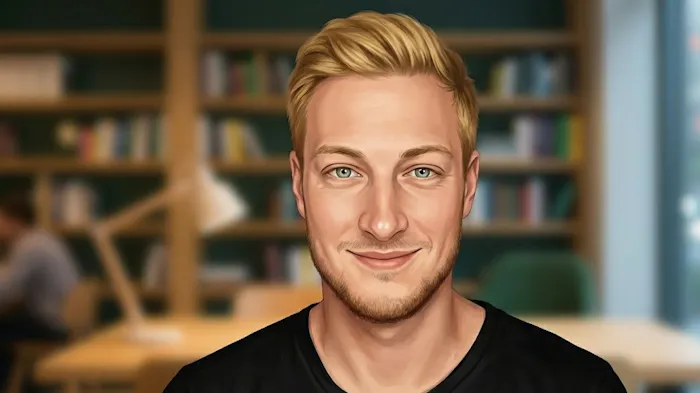
After partnering up with a content creator, Florian Vates quit his job and doubled down on his app, MonAi. Now, his portfolio of apps is bringing in roughly $50k/mo.
Here's Florian on how he did it. 👇
The first success
I always wanted to study something creative — Design, Photography, Videography, etc. — but ended up studying computer science because I found it offered the greatest overlap of creativity and programming. I loved both. After university, I started working as an iOS developer at an agency in Austria and developed apps on the side for a few years.
By 2025, I worked only half-time at the agency. In January 2026, I finally quit my job and am now living my long-time dream of being an indie hacker. Currently, I mainly work on MonAi because it generates 90% of my income.
MonAi is a minimalist expense-tracking app that reduces friction by using AI for easier expense input. It aims to be less bloated than most other expense-tracking apps that simply offer "ALL THE FEATURES."
I also developed these other apps:
Mindr: a reminder widget that subtly reminds you about "non-time-sensitive," repeating tasks like chores that don't require urgent completion but still need doing. Inspired by the Apple battery widget, it counts down with similar rings and then turns red to show how long tasks are overdue. Once done, you can tap it in the widget to restart the interval.
Re-Frame: turns your old iPad into a digital picture frame, displaying iCloud-shared photo albums (or local ones).
Max: a tool to help you prioritize work items more easily. You tell it how much time you have available; AI estimates or splits tasks to find items to work on during that time. It helps if you experience "analysis paralysis."
Honestly, I never believed this could happen to me, but I released my first apps anyway with the goal of at least making the 99 bucks developer fee back. And now, I generate between $40k and $60k of monthly revenue across all my apps.
Getting started
My first app was called "CORDI." It was an event planning app that aimed to fill the gap left by Facebook events after most young people stopped using Facebook. I struggled to create a true MVP. I built it for about two years, and it included many features. I was a "perfectionist" about it and didn't want to launch it until it was absolutely perfect.
After building it, I found no users beyond my friends. I even had to force them into using it. That should have been a sign. I have since discontinued the app, but I learned many valuable lessons — it changed my approach to app development.
I started building smaller-scope apps with quick turnarounds and launching them publicly on Twitter so I could validate early. And I started thinking about real business models upfront instead of giving everything away and hoping for revenue later.
I reached a few hundred dollars in MRR within a few years, but plateaued until 2024, when MonAi took off thanks to a collaboration with a content creator. He contacted me because he saw my Twitter profile linked inside the app's settings.
Most of my apps are subscription-based. MonAi currently has a "hard" paywall with a free trial. It used to be freemium, but we received many bad reviews stating that the freemium was too restrictive, so I switched to a free trial. This also improved revenue — a win-win.
A basic tech stack
My tech stack is very basic.
I develop everything natively and only for iOS — Android versions, I usually give to a former colleague of mine. So, Xcode is my daily driver. I use Claude Code for all coding-related tasks and increasingly for business decisions, experiment analysis, etc.
The apps that use AI usually use the OpenAI or Anthropic APIs.
I also use:
RevenueCat for my revenue overview and to run experiments
Appwrite for backend/auth
Helm for a more fun App Store Connect alternative
Figma for design

Growth via partner videos
Most of our growth occurred after I collaborated with Charlie Alvarez, a content creator from Colombia. He is now my business partner. Within the first two months, we grew from $300 MRR to $12K, and it has grown steadily since then.
So, we attract most users through his videos. He excels at telling compelling stories.
Most videos are story-driven. We don't try to create viral videos with hundreds of influencers. Instead, my partner creates high-quality videos. These usually don't get millions of views, but they convert at very high rates. We achieve a 14% trial-start rate and 40-50% trial-to-paid conversion from people who come from Instagram or TikTok.
This image clearly shows the revenue increases caused by good videos:

Our user base is mostly in LATAM because the content is in Spanish. As it turns out, the app also seems to have the best PMF there. We tried extending it to the U.S. but haven't had much success yet. We are still working on it.
Experimenting with paid ads
Recently, paid ads have also contributed, but we are still working to improve them.
Initially, we only posted videos from my partner's account, but these did not perform as well for ads. While these videos had a good conversion rate, they reached far fewer people.
Next, we experimented with much shorter content. We created modular videos with interchangeable hooks, build-ups, and payoffs. We now post various combinations of these to find the best format that reaches as many people as possible while maintaining a high conversion rate.
One issue we struggle with is the app's low price, which makes achieving ROI with paid ads challenging.
Partner up early
If I did it again, I would definitely find a partner sooner. I always thought I needed to do it all myself. But having a partner has so many benefits.
Beyond the obvious upside of a great distribution channel, a good partner like Charlie can inspire and motivate you. You can bounce ideas off them. And it's simply much more fun to build something together than alone.
Share your story
Sharing our story transparently and through storytelling is very advantageous for brand loyalty. Our users are very engaged and root for us, which encourages them to spread the word.
Building a community like this is very helpful.
Consistency, UX, and partnership
As far as advice...
Consistency really is key, though it's been said a million times. Don't let your first idea, or even your fifth, demotivate you. You can largely force your luck to happen.
These days, designers and people with UX experience are a perfect fit for programming, now that the barrier to entry is much lower. If you don't have these skills yet, work to improve them. These skills will separate you from the flood of lazily vibe-coded apps.
The rise of consumer app popularity will also attract more content creators who see the potential in partnering up with a developer.
What's next?
I'd love to expand my app portfolio with my partner. I love working on new ideas.
My grand goal is to have a small, lean team that creates and distributes genuinely fun and joyful software. I want to stay small; I'm not looking to scale an app into a unicorn.
I'm a big fan of DHH (David Heinemeier Hansson) and his philosophy of staying small and not over-hiring.
You can follow me on X. Or check out my partner, Charlie Alvarez, or MonaAI's Android developer, Zelimir Bosnjak.

Leave a Comment
MonAi and Mindr both sound like brilliant, friction-free solutions to everyday annoyances. Cheers to quitting the day job and absolutely crushing it!
This is a great example of how partnering with a content creator can accelerate growth for a personal finance app. Building a human connection in your product—like Florian did by making the creator discoverable—really stands out in a crowded market. For those working on budgeting or finance apps, how have you approached marketing and partnerships? Have you found any particular strategies effective for user engagement or growth? At Centscribe, we focus on practical money routines and would love to hear feedback on how apps like ours can better support users' budgeting and transaction review needs while fostering community connections.
The most useful takeaway here is that the creator fit seems as important as the app itself. For consumer apps, I keep seeing broad influencer posts underperform while one creator who can tell the product story clearly does better. I’d probably test small with 3-5 niche creators and judge by trial-start rate, not views.
Really inspiring story. One of the biggest takeaways for me was how distribution and storytelling changed everything — not just building the app itself.
A lot of indie founders focus only on coding, but partnering with the right creator can completely change the growth curve.
Also loved the point about launching smaller MVPs instead of waiting for perfection.
Great read 👏
Really inspiring story. The biggest takeaway for me was how distribution + storytelling changed everything, not just building the app itself. A lot of indie devs focus only on coding, but partnering with the right creator can completely change the growth curve. Also loved the point about launching smaller MVPs instead of waiting for perfection. Great read 👏
The content creator partnership angle is underrated for distribution. Most indie hackers build first and figure out distribution later, but pairing with someone who already has the audience cuts months off that loop. I'm seeing the same pattern from the GitHub side. Building GitPulse Weekly, a weekly report that finds open-source projects with massive traction but no commercial product yet. The distribution problem is real even when the product works. Curious what made you choose a content creator over other channels like communities or SEO?
I love how you dropped the perfectionism and jumped into the pool :). Congrats on what you’ve built.
Good job
This is amazing
This is probably one of the smartest growth strategies for indie apps right now. Most developers focus only on building, but distribution is the real moat. Partnering with creators who already have trust + audience feels massively underrated. Also loved the point about storytelling videos converting better than “viral” content. Great interview 👏
Really loved the part where you talked about spending 2 years building the “perfect” app and then realizing nobody outside friends actually wanted it. Painful lesson, but probably one of the most valuable ones for indie builders.
I guess most of the builder do go into that phase including me.. Hope your inspirational story motivate us all. Good luck..
The 14% trial-start + 40-50% trial-to-paid from Instagram/TikTok is exceptional — most consumer app funnels see trial-to-paid closer to 15-20%, so your conversion rate suggests the content is doing real pre-qualification work before anyone touches the app. The data point you buried is actually the most important one: Charlie doesn't just drive volume, he filters for intent. That's why ads from his same creative underperformed — paid reaches different-intent audiences even with identical content. The RevenueCat experiment layer is exactly right for isolating what actually moves the needle. Running cohort analysis on trial starts by content source would tell you which video topics convert best, not just which videos overall. I work on a lot of this kind of funnel and cohort analysis — put together some free SQL diagnostic scripts that are handy for slicing RevenueCat export data: https://growthwithshehroz.gumroad.com/l/psmqnx
Thanks Muhammad! That's a good point about the ads! We're still experimenting let's see where this goes :)
Loved the story, especially the distribution part. Finding that "perfect" partner is where everything boils down to IMO. God luck on your journey!
24/7 CRYPTOCURRENCY RECOVERY AI HACKING EXPERTISE CYBER RESEARCH COMPANY/ WIZARD MARK HACKERS RECOVERY
My name is Tobais malcon and i am here to share my experience about recovery expert who help me in getting back my funds without any issues. If you recently lost a portion of your savings or retirement nest egg to a cryptocurrency, forex, or binary options scam, Bank account, Instagram, X twitter, Tiktok, FB and other platforms,Wizard Mark Hackers Recovery just retrieve my funds worth $490,700 BTC from fake Binance. I am so glad right now. all thanks to Wizard Mark Hackers Recovery and the great help that was render to me. i am also reaching out to your who needs help. contact through Wizard Mark Hackers Recovery with their AI Expertise.
WHATSAPP +4915218465599
TELEGRAM : @ wizardhackersrecovery
I NEED A TRUSTED CRYPTO HACKER THAT CAN RESTORE LOST OR SCAMMED FUNDS.
Are you struggling to get back the money you lost? Every day, countless individuals face the devastating impact of scam operations that drain their hard-earned savings. But there’s good news – GEO COORDINATES RECOVERY HACKER are here to help you recover what’s rightfully yours. I lost my entire savings to a fake crypto investment scam while I was looking for a way to double my savings. After many weeks of trying to find a way to get my money back with no success, I finally came across a crypto recovery company GEO COORDINATES RECOVERY HACKER, a reliable and trustworthy crypto recovery company. I'm immensely grateful for his dedication, professionalism, and unwavering support. You can get in touch with them through below contact details
WhatsApp ; +1 ( 318 ) 203-3657
I had to send out my review also. They are indeed recommendable.
The shift from perfectionism to fast validation is the real lesson here. Partnering with a creator who can tell the story clearly is what changed everything.
The shift from CORDI to smaller, faster apps is the real lesson. Two years of perfecting something nobody wanted is a trap. Quick launches and early validation save years of pain.
The content creator partnership changed everything. Going from a few hundred MRR to 40k plus shows the power of distribution. The best app in the world means nothing if nobody sees it.
Do you think the partnership worked because the creator already had distribution, or because they became genuinely embedded in the product and customer understanding?
There's a big difference between "creator marketing" and effectively bringing a media co-founder into the business.
woo there is a lot of spam in these comments. but this story sounds pretty amazing.
The pattern most builders get wrong with creator partnerships: they treat the creator like a distribution channel, and the creator treats them like a paycheck. The ones that compound are structured like co-founderships, with shared upside and shared product decisions.
Running a tool for creators at SocialPost.ai, the biggest tell of which partnerships will survive 12 months is whether the creator can talk about product roadmap, not just performance metrics. Anyone can do a paid video. Almost nobody sustains years of organic content for a product they don't feel ownership over.
Your post gave me a lot of useful insights, especially around app development and promotion. I learned quite a bit from the comments as well. Thanks for posting this.
Testing those modular hooks and build-ups is exactly how you crack the code on paid social. I run a lot of lead gen campaigns on TikTok and Facebook targeting LATAM markets like Mexico and Argentina, and finding that perfect combination of creative assets drops the CPA significantly compared to running standard videos. It's awesome that you found such strong product-market fit in Latin America right out of the gate. Are you noticing if specific hooks resonate universally across the region, or are you having to tailor the messaging country-by-country?
Great post, thanks for sharing. How long did it take you to get your first user?
Inspiring to say the least.
really good idea
The content creator partnership model is
one of the most underrated growth strategies
for indie hackers — going from $300 to $12K
MRR in two months purely through story-driven
videos is remarkable.
The 14% trial-start rate and 40-50% trial-to-paid
conversion from Instagram/TikTok shows that
quality beats quantity every time. Most founders
chase viral — Florian chased conversion.
I just launched AgentFlow Pro — a Real Estate
CRM with legal docs, AI, and global maps for
$15/mo. The "partner up early" section is
something I'm taking seriously. Looking for
a real estate content creator to partner with
the same way Florian found Charlie.
This is the most actionable growth story I've
read on IH this week. The revenue chart says
everything. 🚀
The part that really resonated with me is your use of AI for the coding tasks combined with a heavy focus on UX. I'm currently building a Next.js travel discovery platform and doing the exact same thing—acting as the PM while AI writes the bulk of the syntax. It's wild how much faster we can move now.
Your warning about needing good UX to stand out from 'lazily vibe-coded apps' is exactly why I joined IH. If the visual trust isn't there, the product dies.
Also, partnering with a content creator for distribution instead of fighting the marketing battle alone is a massive lightbulb moment. Brilliant move. Thanks for sharing the transparent numbers!"
This case study is a masterclass in breaking out of the 'perfectionist developer' trap. Spending two years on an unvalidated MVP is a story way too many of us know by heart.
The turning point here—realizing that partnering up with a storyteller creator is the ultimate multiplier—is incredibly sharp. Most builders think they have to do it all alone, but combining clean native execution with a high-converting content funnel is how you actually force luck to happen. Absolute gold.
Really interesting reading this from the perspective of someone coming from a creative rather than technical background. I’m an artist currently exploring an app concept born entirely from frustrations with layer-based workflows in creative software. It’s fascinating seeing how many solo builders are now able to experiment with ideas that traditionally would’ve required full teams.
As someone outside the coding world, posts like this are incredibly encouraging. I’ve recently started validating an idea around non-destructive creative workflows after years of struggling with layered creative apps, and it’s eye-opening seeing how lean modern app development has become.
Curious whether other creatives or developers have experienced similar workflow issues. I’d genuinely love to hear how others currently approach or solve them.
This is really interesting to read as someone coming from a creative background rather than tech. I’m an artist and recently realised a workflow frustration I’ve had for years inside creative apps could potentially be turned into a real product. It’s fascinating seeing how creators and developers collaborate to build things from genuine lived experience.
I’m actually exploring an app concept born from frustrations I’ve had using layered creative software as an artist. Reading stories like this is making me realise there’s probably a huge advantage in creators partnering with developers rather than trying to become full-time coders themselves.
good and inspiring
Really enjoyed this. The "less bloated, reduce friction" thinking behind MonAi is what stuck with me — most tools die by piling on features, and knowing what to leave out is the underrated skill. Also curious about the partner-video growth: how did you find creators who actually fit the product, and was it rev-share or a flat fee? I'm building small single-purpose tools too, and that distribution piece is the one I keep underestimating.
GET IN TOUCH WITH A LICENSED CRYPTO RECOVERY HACKER EXPERT: ALPHA KEY
After investing over $458,760 worth of USDT, everything turned out to be a scam. I was depressed and on the verge of taking my own life until a coworker recommended ALPHA KEY RECOVERY to me after reading their online reviews. After being scammed, I was 50/50 about everything because of trust issues. Today marks seven months since I was conned by some online broker who claimed to help me through my process.Alpha key came to my aid and restored back my joy and happiness by recovering almost everything taken from me reach out to them today and be a living witness of their good work .
WhatsApp : +15714122170
Signal : +15403249396
GET IN TOUCH WITH A LICENSED CRYPTO RECOVERY HACKER EXPERT: ALPHA KEY
After investing over $458,760 worth of USDT, everything turned out to be a scam. I was depressed and on the verge of taking my own life until a coworker recommended ALPHA KEY RECOVERY to me after reading their online reviews. After being scammed, I was 50/50 about everything because of trust issues. Today marks seven months since I was conned by some online broker who claimed to help me through my process.Alpha key came to my aid and restored back my joy and happiness by recovering almost everything taken from me reach out to them today and be a living witness of their good work .
WhatsApp : +15714122170
Signal : +15403249396
The creator-partnership model is the most underrated distribution play. It simply doesn't matter if you are building Sea Walls or a consumer social product, and this story proves that with certainty! We are in an age where anything is possible with the click of a button and we all need to take advantage!
informative
Super inspiring story. The biggest takeaway is probably that distribution and storytelling matter just as much as building the product itself. A great reminder that small, focused apps with strong UX can still become huge businesses today.
—
The creator-partnership model is one of the most underrated indie distribution plays. Founders default to building because building is the thing they know. Most try to 'hire' creators on a flat fee or paid post and wonder why it doesn't work. The reason this worked for Florian is the actual sharing of upside. Real equity or rev share is the only thing that gets a creator to treat your product like their own. Question for the room: how do you find the right creator before you have traction? Most founders wait until product-market fit and then go looking. By then the leverage is gone.
The creator finding you through a Twitter link in your app settings is the detail everyone's skipping. That wasn't luck, the product had a human surface that made the right person notice. Most apps are anonymous. That one link was a distribution channel disguised as a footer.
Really enjoyed the article! Congratulations on what you achieved.
This is one of the most honest indie hacker stories I’ve seen lately.
The biggest insight here wasn’t the tech stack.
It was realizing that distribution + storytelling can completely change the trajectory of a product.
A lot of builders underestimate how powerful the right creator partnership can be.
I enjoyed reading the article. I am a creative content creator and would love to find a person like you to make a dramatic change.
reach out to me with your social media page, whatsapp +919840285112
congratulations and a good job! The privacy angle resonates with me — I just launched with a similar stance. Curious how you handled early user acquisition.
This is a helpful read, especially since it's also regarding a budgeting app. I took of 2025 to build my personal finance app Bento that I just released last week. Now it's time to market it, which is my achilles heel. So finding a partner would definitely be ideal.
This hit hard because the biggest thing most solo founders underestimate is distribution leverage.
A good creator partnership can outperform months of building features nobody sees.
Also agree heavily on the storytelling point.
People don’t just buy software anymore — they buy the narrative, workflow, and emotion around it.
Interesting, you think different... I love this... If you are looking for contacts to help boost your sales and marketing... I have lists of high networth persons and can tailor customers that could either invest or boost customer sales. I am very well connected shoot me a message on telegram @caseyimafidon
i need helpp
A CRYPTO/DATA BASE RECOVERY EXPERT WITH A LICENSE: ALPHA KEY
After contacting Alpha Key Recovery, a licensed cryptocurrency recovery expert, about my case, I was able to get back on track after a month of being depressed over being conned out of $379,800 in cryptocurrency investments with the wrong broker. Alpha Key Recovery Hacker Expert is a recovery hacker that I will be proud to refer anyone to because of what I have seen out here with scammers.
WhatsApp : +15714122170
Signal : +15403249396
Partnering with content creators for distribution is one of the most underrated growth levers for SaaS founders. The trust creators have with their audiences converts so much better than cold ads - this is a great example of that flywheel working.
💯
The content creator partnership mechanic is underrated. 14% trial-start + 40-50% trial-to-paid from Instagram/TikTok is unusually high — that's a story-driven funnel, not an ad funnel. I'm building a $49 Notion template for CS engineers and trying to figure out the same question: does distribution come before or after product-market fit? Sounds like for you, the partner was the PMF signal.
An incredible case study. It proves that distribution often beats the product itself. As a developer building a wellness codebase, it’s a healthy reminder that we can't do it all alone and that marketing needs a dedicated brain. Thanks for sharing this breakdown, James!
The line everyone's skipping: Charlie reached out because he saw the Twitter link in the app settings. That's the whole story. The partnership didn't happen because the product was great ,happened cause the product had a human surface that let the right person find the founder. Most indie apps are anonymous. A link to a real person in settings is a distribution channel disguised as a footer.
I think the product also has to be great though, he wouldn't have reached out if the product was garbage 😅
I see a lot of recommendations online and it’s already obvious there are bad eggs online who will only add to your mystery. I can only recommend one and you can reach them via mail on (omegacryptorecovery AT gm ail co m) if you need help on recovering what you lost to scammers.
been exploring this exact path for my PM tools. the creator search is manageable. finding one whose audience actually pays for software - that's where I keep getting stuck.
This is honestly one of the most realistic indie hacker stories I’ve read recently. The biggest takeaway for me wasn’t just the revenue growth — it was how quickly things changed after focusing on distribution and partnerships instead of trying to perfect everything alone.
The part about building for 2 years with no real users is something many developers silently experience. Launching smaller, validating early, and improving based on feedback is such an underrated lesson.
Also loved the focus on UX and storytelling over pure “AI hype.” Apps that actually solve friction points and connect emotionally with users will always stand out.
Really inspiring journey. Huge respect to Florian and the team behind MonAi
Thanks 🙌
The creator discovery story is worth unpacking. The creator contacted Florian because he saw the Twitter link in the app settings. That's an accidental discoverability win -- the product had a surface that extended beyond the app itself and made the right person notice.
Most indie mobile apps optimize for App Store discoverability and nothing else. The discovery surface is actually much wider: GitHub repos (many iOS developers check these), Twitter mentions in release notes, community posts about specific problems the app solves, and increasingly, AI assistant recommendations when someone asks 'what's a good minimalist expense tracking app?'
The shift to using Claude Code for 'business decisions' is interesting. The founders who use AI tools this deeply tend to generate more documentation, changelogs, and written artifact as a byproduct -- which is exactly the signal that makes a product visible to AI recommendation systems. It's not deliberate, but it works.
The creator partnership is the distribution story, but the surface that made it happen was the discoverability behind it. Building intentionally there before you need it is the part most indie hackers miss. We're working on this problem at 3vo.ai for AI-native products specifically.
The "partner up early" advice is the part I keep coming back to. Most builders wait until the product feels ready, but by then you've already lost months of distribution you could have been building. The 40-50% trial-to-paid from story-driven content is a number I'd never expect — it makes sense though, people buy from creators they already trust.
Florian, your story is super inspiring, I'm curious to know more about how you structured the partnership with the content creator, was it a revenue share model or a fixed fee?
wo have a profit sharing agreement, yes. I think it makes sense since he's also more than a creator i pay to do content, he's an actual partner.
The 14% trial-start and 40-50% trial-to-paid from social is a number most SaaS founders would kill for. Story-driven content converting better than viral bait makes complete sense in hindsight — people buy from creators they trust, not ones they stumbled on. The switch from freemium to free trial fixing both reviews and revenue at the same time is also a great lesson. Most people assume those two things are in tension.
The transition from solopreneur to partnership is where the 'figure it out as we go' client communication style becomes expensive. What Florian's describing - going all-in with a partner at scale - requires explicit expectation-setting about who owns what decisions, how disputes get resolved, and what 'success' looks like when both people are all-in.
The patterns that kill creator partnerships aren't usually creative disagreements - they're conversations that felt too awkward to have early: revision rounds, revenue split triggers, who controls product direction when the audience evolves. The scope creep that kills freelance projects looks the same in partnerships - it just shows up as equity discussions instead of invoice disputes.
The hard conversations get easier with a template. Most friction in both freelance and creator partnerships comes from leaving uncomfortable specifics for 'when it comes up' rather than surfacing them in a structured kickoff. The founders who scale partnerships fastest tend to be the ones who got comfortable with the awkward alignment conversation first.
partnering early is the part that surprised me. every builder I know waits until they have something polished - by then they've already seen 20 pitches just like it.
The creator-fit point is the part I’d underline. For consumer apps, I’m starting to think audience trust matters more than raw reach. A creator who already shapes the habit you’re trying to support will beat a bigger general audience. I’m testing this thinking with MetricSync now, especially around short demo/story content instead of feature lists.
Hi, sir.
Experienced Senior Software Developer focused on building scalable, high-performance applications. Portfolio and GitHub available below for detailed project work and contributions.
Please check my profile and you can see my Portfolio/GitHub.
I hope to join your idea.
Best regards.
The breakdown point in most creator partnerships is usually the brief-to-delivery loop. The creator spends 2-3 hours creating, sends it over, and then both sides spend another 2 hours in revision cycles over misaligned expectations that were there from the start. The brief itself was vague. What's changed in 2025-2026 is that AI can close the brief quality gap -- but only if you're prompting it correctly for the client communication side, not just the content production side. Freelancers and creators who've figured out how to use AI for client intake, scope alignment, and feedback translation are cutting revision rounds by 50-60%. The prompt library matters more than the AI tool -- knowing exactly how to extract client expectations in structured form, then convert that into a production brief the creator can actually execute on. Curious which part of your process still requires the most back-and-forth with clients?
nice
The Charlie Alvarez partnership really seems like the turning point. Going from 300 to 12k MRR in two months just from video content is insane. That 40-50% trial to paid conversion is what most apps dream of.
The LATAM focus making the most sense is interesting too. Sometimes you stumble into the right market by accident.
The paid ads challenge with low price point is real. Hard to make math work when your subscription is on the cheaper end. Have you tried annual plans with a discount to bump lifetime value?
I heavily related with your quote here, and have observed it as my biggest flaw.
'I was a "perfectionist" about it and didn't want to launch it until it was absolutely perfect.'
There is always a drive for me to reach 100%, and that's lead to much loss. That's definitely my biggest INTJ flaw, but I've caught onto that. For weeks I've been saying to myself 70% > 100%. Act at 70% instead of a 100% that I will, in my eyes, never reach. I will never see anything as perfect.
Now onto what you said afterward. You even had to force your friends to use it! That's a massive lesson and I appreciate you sharing that. It's further reinforced the good mental models I've been trying to build. Soft/alpha launches to test friction are so important. It hit me right in the feels when I read that you built it for 'about two years'.
Again thanks for sharing.
@fvates Good luck with the paid ads — the LATAM angle is genuinely interesting. One thing I've seen work for consumer apps is having clean funnel data in one place (not just RevenueCat) so you can trace exactly which ad creative leads to LTV, not just installs. Once you have that visibility, the ROI math on ads becomes much clearer. I have a free SQL diagnostic scripts pack handy for anyone piping subscription data into a database: https://growthwithshehroz.gumroad.com/l/psmqnx
It's quite fascinating that the spanish speaking LATAM audience proved to be the best match.
Interesting how distribution became the real inflection point here, not the product itself. Makes me wonder: how many technically strong indie apps never reach PMF simply because the founder treats distribution as an afterthought instead of a core competency from day one?
This comment was deleted 24 days ago