Best Gojek Clone App Revenue Models for Startups in Thailand in 2026
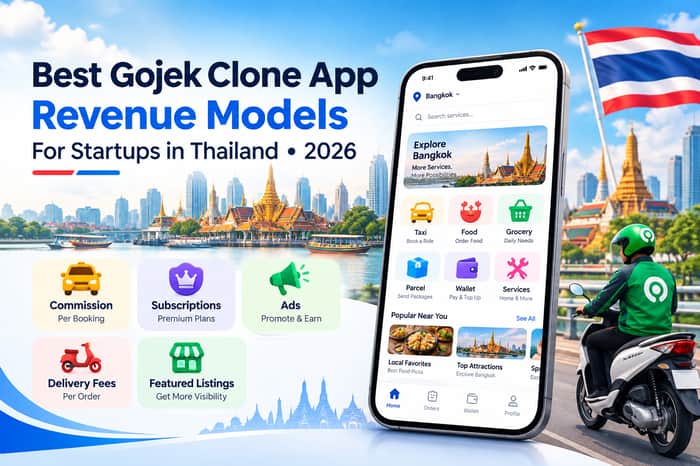
Thailand’s digital economy continues to create opportunities for entrepreneurs looking to build convenient, multi-service platforms. A Gojek-style super app can bring several everyday services—such as ride-hailing, food delivery, grocery delivery, courier services, and home services—together under one platform.
For startups, however, launching the app is only the beginning. A sustainable revenue model is essential for covering operating costs, attracting service providers, and generating long-term business growth.
In this guide, we explore the best Gojek clone app revenue models for startups in Thailand in 2026, along with examples of how different services can contribute to overall revenue.
What Is a Gojek Clone App?
A Gojek clone app is a multi-service application inspired by the business structure of super apps such as Gojek. Instead of focusing on a single service, the platform allows users to access multiple on-demand services through one application.
Depending on the business strategy, a Gojek clone for Thailand can include:
- Ride-hailing and taxi booking
- Motorbike booking
- Food delivery
- Grocery delivery
- Parcel and courier delivery
- Pharmacy delivery
- Beauty services
- Cleaning services
- Plumbing and electrical services
- Car wash services
- Laundry services
- Handyman services
- Personal shopping
- Local delivery services
This multi-service structure creates several opportunities to monetize users, drivers, merchants, and service providers.
Why Consider a Gojek Clone Business in Thailand in 2026?
Thailand has a strong digital consumer ecosystem, with customers increasingly using mobile platforms for transportation, food, shopping, and everyday services.
A startup can use a multi-service model to target several customer needs instead of depending on a single revenue stream.
For example, a user may book a ride in the morning, order lunch through the same platform, send a parcel in the afternoon, and order groceries in the evening.
This creates opportunities for:
- Higher customer engagement
- Multiple transaction opportunities
- Cross-selling between services
- Recurring customer usage
- Multiple revenue channels
- Expansion into different Thai cities
Instead of building separate applications for every service, entrepreneurs can develop one scalable ecosystem.
10 Best Revenue Models for a Gojek Clone App in Thailand
1. Commission From Drivers and Service Providers
Commission is one of the most common monetization methods for an on-demand platform.
The platform can charge drivers or service providers a percentage of each completed transaction.
For example:
Customer booking → Service provider completes order → Platform deducts commission → Provider receives remaining amount
Commission rates can vary depending on:
- Service category
- Order value
- Location
- Partner agreement
- Promotional campaigns
- Business strategy
For a startup, commission-based revenue can provide a direct connection between platform revenue and transaction volume.
Example
If a food order is worth THB 500 and the platform charges a 15% commission:
THB 500 × 15% = THB 75 platform revenue
The exact rate should be determined based on operating costs, market conditions, partner agreements, and applicable regulations.
2. Delivery Fees
Delivery charges can generate revenue from food, grocery, parcel, pharmacy, and other delivery services.
The platform can calculate delivery fees based on factors such as:
- Distance
- Delivery type
- Order size
- Time
- Location
- Demand
- Vehicle type
For example, a customer ordering groceries from a nearby store could pay a delivery fee based on the estimated distance between the store and destination.
A platform can also introduce different delivery options, such as:
- Standard delivery
- Express delivery
- Scheduled delivery
This creates additional monetization opportunities without relying entirely on commissions.
3. Ride-Hailing Service Fees
Ride-hailing can become a major revenue source for a Gojek-style platform.
The app can generate revenue from each completed taxi or motorbike booking through a service fee or commission structure.
Possible ride categories include:
- Car rides
- Motorbike rides
- Premium vehicles
- Airport transfers
- Scheduled rides
- Corporate transportation
The platform can also use distance, time, vehicle category, and applicable demand-based pricing mechanisms to calculate fares.
However, pricing and operating practices should comply with Thailand's transportation and consumer-protection requirements.
4. Restaurant Commission
Food delivery can create another significant revenue channel.
Restaurants can join the platform and receive orders through the app. The platform can charge a commission on completed orders according to its merchant agreement.
Additional restaurant monetization options may include:
- Featured restaurant placement
- Sponsored listings
- Promotional campaigns
- Merchant subscription plans
- Advertising packages
For example, a restaurant may pay for greater visibility when users search for restaurants in a particular area.
This turns the restaurant marketplace into both a transaction-based and advertising-based revenue channel.
5. Grocery and Retail Marketplace Fees
A Gojek clone can also support grocery stores, convenience stores, supermarkets, and other retailers.
The platform can earn through:
- Merchant commissions
- Delivery fees
- Subscription plans
- Featured listings
- Promotional campaigns
- Marketplace fees
The advantage of this model is that customers can use the same account for multiple categories.
For example:
Taxi → Food → Grocery → Courier
This cross-service ecosystem can increase the number of transactions generated by an individual customer.
6. Subscription Plans
Subscription-based monetization can provide recurring revenue.
A startup could introduce a membership program offering benefits such as:
- Reduced delivery fees
- Special ride discounts
- Food delivery promotions
- Priority support
- Exclusive merchant offers
- Member-only promotions
For example, a platform could offer monthly or annual membership plans.
The subscription structure should be designed around customer usage patterns and unit economics rather than simply adding a membership fee.
Why subscriptions matter
Transaction-based revenue fluctuates with usage. Subscription revenue can provide a more predictable recurring component when customers find enough value in the benefits.
7. In-App Advertising
Once the platform develops a meaningful user base, advertising can become an additional revenue stream.
Businesses could promote their products or services through:
- Sponsored listings
- Banner advertisements
- Search-result promotions
- Promotional cards
- Local business advertisements
- Featured service providers
For example, a restaurant could pay to appear more prominently when users search for food delivery in a particular location.
Advertising can be especially useful because merchants already participating in the platform become potential advertising customers.
8. Surge or Dynamic Pricing
Demand can vary significantly depending on time and location.
During periods of higher demand, a platform may use dynamic pricing mechanisms where legally permitted and transparently communicated.
Factors can include:
- Demand
- Driver availability
- Distance
- Time
- Traffic conditions
- Service category
For example, ride availability around airports, business districts, entertainment areas, or during busy periods may affect pricing.
However, startups should carefully design pricing rules, communicate prices clearly, and comply with applicable Thai laws and regulations.
9. Corporate Business Accounts
A Gojek-style platform does not have to focus exclusively on individual consumers.
It can create business accounts for companies that need:
- Employee transportation
- Business deliveries
- Document delivery
- Corporate food orders
- Logistics services
- Scheduled transportation
Companies could receive centralized billing and transaction management.
Potential revenue can come from:
- Corporate service fees
- Contract-based pricing
- Delivery charges
- Ride commissions
- Monthly account plans
B2B services can complement consumer-facing operations and diversify the platform's customer base.
10. Home-Service Commission
A multi-service platform can expand beyond transportation and delivery.
Home-service categories may include:
- Cleaning
- Plumbing
- Electrical services
- Appliance repair
- Beauty services
- Car washing
- Laundry
- Handyman services
The platform can connect customers with verified service professionals and charge a commission or booking fee for completed services.
This model can be particularly useful for increasing customer engagement outside traditional ride-hailing and food-delivery use cases.
Additional Revenue Opportunities
The ten models above are not the only possibilities. A Gojek clone can combine multiple monetization strategies.
Priority booking fees
Customers can pay additional fees for certain priority or scheduled services where offered.
Cancellation fees
The platform may charge applicable cancellation fees according to its terms and relevant regulations.
Merchant membership
Restaurants, retailers, and service providers can receive additional tools through paid merchant plans.
Premium service categories
A platform can introduce premium rides, express delivery, or specialized services at different price points.
Logistics partnerships
Businesses can use the platform for recurring delivery requirements under commercial agreements.
How to Choose the Right Revenue Model for Thailand
There is no single monetization model that works for every startup.
Entrepreneurs should consider several factors before selecting their revenue strategy.
1. Target Audience
Determine whether the platform is primarily targeting:
- Students
- Families
- Professionals
- Tourists
- Small businesses
- Restaurants
- Retailers
- Corporate customers
Different customer groups have different purchasing behavior.
2. Service Category
Revenue strategies should match the service.
Example Gojek Clone Revenue Structure for Thailand
A startup could combine several revenue streams instead of depending on one.
For example:
Ride-Hailing
↓
Commission + applicable service fees
Food Delivery
↓
Restaurant commission + delivery fee + advertising
Grocery
↓
Merchant commission + delivery fee
Courier
↓
Delivery charge
Home Services
↓
Provider commission
Premium Membership
↓
Monthly subscription
Business Accounts
↓
Corporate service fees
This diversified structure can reduce dependence on a single service category.
Features That Support Monetization
The technology behind the Gojek clone should support the selected revenue strategy.
Important features can include:
Admin Dashboard
Administrators can manage users, drivers, merchants, service providers, commissions, payments, promotions, and reports.
Commission Management
The admin can configure commission structures according to service categories or partner agreements.
Payment Integration
The platform can support appropriate payment methods for the Thai market, subject to payment-provider availability and regulatory requirements.
Wallet System
Users and service providers can manage balances, refunds, promotional credits, and eligible transactions.
Promo Codes
Businesses can create promotional campaigns to attract new users and encourage repeat purchases.
Analytics
Business owners can monitor:
- Orders
- Revenue
- Commission
- Customer activity
- Driver activity
- Merchant performance
- Service demand
Push Notifications
Notifications can promote new services, discounts, order updates, and relevant offers.
How to Increase Revenue Without Overcharging Users
A startup needs to balance monetization with customer and partner value.
Instead of continuously increasing customer fees, entrepreneurs can focus on increasing transaction frequency.
For example:
More services → More use cases → More transactions → More platform revenue
Cross-selling is particularly important for a multi-service app.
A customer who initially downloads the application for taxi booking can later become a food-delivery, grocery, courier, or home-service customer.
Launch Strategy for a Gojek Clone in Thailand
A startup does not necessarily need to launch every service simultaneously.
A phased approach can reduce operational complexity.
Phase 1: Core Service
Start with one or two services, such as:
- Ride-hailing
- Food delivery
Phase 2: Delivery Expansion
Add:
- Grocery
- Courier
- Parcel delivery
Phase 3: Lifestyle Services
Introduce:
- Home services
- Beauty
- Laundry
- Car wash
Phase 4: Business Services
Expand into:
- Corporate accounts
- Business delivery
- Merchant advertising
- Subscription programs
This approach allows the startup to test demand before investing heavily in additional service categories.
Why a Multi-Revenue Model Can Be Valuable
The main advantage of a Gojek-style business model is diversification.
A single-service application may depend heavily on one category. A multi-service platform can potentially generate revenue from multiple activities.
For example:
Transportation + Food + Grocery + Courier + Home Services + Advertising + Subscriptions
Each category can contribute to the overall business model.
However, adding services also increases operational complexity. Startups should therefore validate each category before expanding.
Final Thoughts
A Gojek clone app in Thailand can use multiple monetization strategies in 2026, including commissions, delivery fees, ride service fees, merchant charges, advertising, subscriptions, corporate accounts, and home-service commissions.
The most important step is not simply adding as many revenue models as possible. Instead, startups should select models that fit their target users, service categories, partner relationships, operating costs, and local regulatory requirements.
A phased launch can help entrepreneurs validate demand, optimize pricing, build a strong service-provider network, and gradually expand into a broader multi-service ecosystem.
With the right combination of technology, operations, partnerships, and monetization, a Gojek-style platform can serve multiple everyday needs through a single mobile application.
FAQ
1. What is the main revenue model for a Gojek clone app?
A common model is charging commissions or service fees on completed transactions. However, platforms can combine commissions with delivery fees, subscriptions, advertising, and other revenue sources.
2. Can I launch a Gojek clone app in Thailand?
Yes, entrepreneurs can develop a multi-service platform for the Thai market, but the specific services and operating model should comply with applicable Thai laws, licensing requirements, payment rules, and consumer-protection requirements.
3. How does a Gojek clone make money from food delivery?
Revenue can come from restaurant commissions, delivery fees, sponsored listings, merchant plans, and promotional advertising.
4. Can a Gojek clone generate recurring revenue?
Yes. Subscription or membership plans can create recurring revenue when customers receive benefits that provide sufficient ongoing value.
5. Can I add multiple services to a Gojek clone?
Yes. Depending on the technical architecture and business plan, services such as taxi booking, food delivery, grocery delivery, courier services, and home services can be integrated into one platform.
6. How can restaurants generate revenue for the platform?
Restaurants can contribute through transaction commissions, promotional campaigns, sponsored placements, and potentially merchant subscription plans.
7. Is advertising suitable for a Gojek clone?
Advertising can become an additional revenue channel after the platform develops sufficient user and merchant activity. Sponsored listings and promotional placements can be offered to participating businesses.
8. Should a startup launch all services at once?
Not necessarily. A phased launch can allow the business to validate demand, establish operations, and expand based on actual customer usage.
9. What features are important for monetization?
Commission management, payment integration, analytics, promotional tools, subscription management, merchant management, delivery management, and an administrative dashboard can support different revenue models.
10. What should startups consider before launching in Thailand?
Startups should research customer demand, competition, service-provider availability, operating costs, payment methods, taxation, licensing, data protection, consumer protection, and other applicable Thai regulations before launch.
