How to Build a Scalable On-Demand Platform With a Multi Service App Development Company
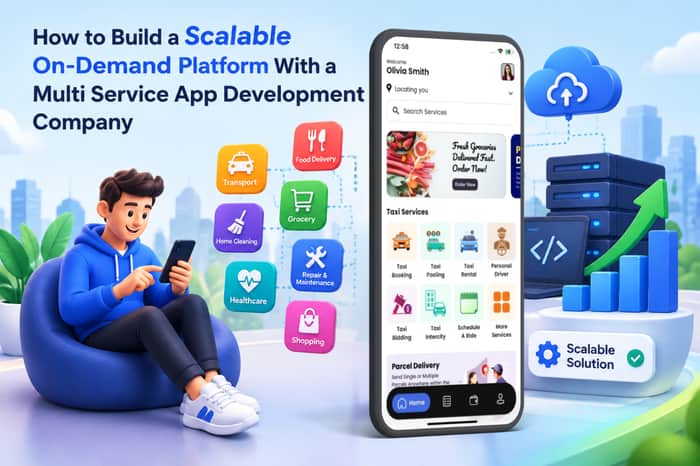
Launching an on-demand platform sounds straightforward until you start thinking about everything happening behind the scenes. Customers want convenience, service providers need reliable tools, and businesses need a system that can handle transactions, operations, and growth without becoming difficult to manage.
That is where working with a Multi Service App Development Company can make the development process more structured. Instead of creating separate applications for every service, businesses can build a connected platform where different services operate through a common digital ecosystem.
But scalability should be considered from the beginning. Adding more users, providers, locations, and services later should not require rebuilding the entire platform.
Start With a Clear Business Model
Before discussing features or technology, define what your platform is actually going to offer.
A multi-service platform could combine ride booking, food delivery, grocery delivery, courier services, home maintenance, beauty services, pharmacy delivery, or other categories. You do not necessarily need to launch every service at once.
Starting with a focused group of services can help you understand customer demand and operational requirements. Once the platform gains traction, additional services can be introduced based on market needs.
Your business model should also define how revenue will be generated. Depending on the service category, options may include commissions, delivery fees, subscriptions, service charges, advertising, or partnerships.
Build Around a Modular Architecture
Scalability becomes easier when individual services can be added without disrupting the entire platform.
A modular architecture allows different service categories to function as independent modules while sharing common components such as user accounts, payments, notifications, location services, and administrative tools.
For example, a business could initially launch ride booking and later add grocery delivery. The new module should integrate with the existing platform rather than requiring a completely separate application.
This approach can reduce duplication and make future expansion more manageable.
Create Separate Experiences for Each User
A multi-service platform usually involves several types of users, and each one has different requirements.
Customers need an easy way to browse services, place orders or bookings, make payments, track requests, communicate with providers, and review completed services.
Service providers need tools to receive requests, manage availability, accept or reject jobs, navigate to customers, view earnings, and update service status.
Meanwhile, administrators require centralized controls for users, providers, services, transactions, commissions, promotions, reports, and platform settings.
A well-planned system connects these experiences while keeping each interface relevant to its user.
Make the Customer Journey Simple
Having multiple services does not mean the application needs to feel complicated.
The home screen should make it easy for customers to discover available services. Categories, search, location-based recommendations, recent activity, and personalized options can help users find what they need quickly.
The booking or ordering process should also be straightforward. Customers should be able to select a service, enter the required information, review pricing, choose a payment method, and confirm their request with minimal friction.
A simple customer journey can become an important part of long-term platform adoption.
Think About Provider Operations
The customer-facing application gets most of the attention, but service providers are equally important.
A scalable platform needs efficient provider management. Depending on the business model, providers may need profile verification, document submission, availability settings, service-area management, request notifications, navigation, earnings tracking, and performance information.
For location-based services, intelligent matching can help connect customers with suitable providers based on factors such as proximity, availability, service type, and other business rules.
These operational tools can become increasingly important as the platform expands into additional cities or service categories.
Integrate Payments and Transactions Carefully
Payments are a core component of most on-demand platforms.
A business may need to support multiple payment methods depending on its target market. These could include cards, digital wallets, bank-based payment options, cash payments, or other locally supported methods.
The platform should also account for refunds, commissions, provider payouts, transaction records, promotional discounts, and payment status updates.
Working with a development partner that understands these workflows can help businesses plan the transaction architecture before development becomes complex.
Use an Admin Panel as the Control Center
A multi-service platform can generate a significant amount of operational data.
An effective admin panel gives business owners a centralized view of what is happening across the platform. Administrators can manage customers, service providers, bookings, orders, payments, commissions, service categories, promotions, and support requests.
Analytics can also help identify which services are receiving demand, where providers are most active, and where customers are dropping out of the booking process.
This information can support future business decisions without relying entirely on assumptions.
Plan for Expansion From Day One
One of the biggest mistakes businesses can make is designing a platform only for today's requirements.
If you expect to expand into new locations or services, consider those possibilities during the initial architecture and database planning.
For example, service categories should be configurable rather than hard-coded wherever practical. Pricing rules, commission structures, service availability, operating areas, and provider settings should also be manageable through the administration system.
This creates a foundation where expansion becomes a configuration and development exercise rather than a complete rebuild.
Choose the Right Development Partner
The choice of a Multi Service App Development Company can influence how efficiently your platform moves from concept to launch.
Instead of looking only at development cost, evaluate the company's experience with multi-sided marketplaces, location-based services, payment workflows, provider management, admin systems, scalability, and post-launch support.
Ask potential development partners how they approach architecture, security, testing, integrations, customization, deployment, and future feature development.
It is also useful to review their previous projects and understand whether their development approach matches your business model.
Launch, Measure, and Improve
A scalable platform does not need to launch with every possible feature.
Start with the core services and workflows required to validate the business model. Once real users begin interacting with the platform, monitor usage patterns and collect feedback.
Look at metrics such as bookings, completed transactions, repeat customers, provider activity, cancellations, average transaction value, and service-specific demand.
These insights can help determine which features and services deserve further investment.
The goal is not simply to build a large application. It is to build a platform that can grow based on real business requirements.
Final Thoughts
Building a scalable on-demand platform requires more than connecting customers with service providers. It requires thoughtful planning across technology, operations, payments, user experience, administration, and future expansion.
A Multi Service App Development Company can help businesses bring these components together through a unified platform. With modular architecture, flexible administration, multiple user interfaces, secure transactions, and room for new services, the platform can be prepared for growth from the beginning.
The strongest foundation is one that leaves room for change. Your first service may attract the initial users, but a well-designed platform can provide the structure needed to introduce new services, enter new markets, and develop the business over time.
FAQs
1. What is a multi-service on-demand platform?
A multi-service on-demand platform allows customers to access different types of services through a single digital platform. Depending on the business model, it can include transportation, delivery, home services, shopping, and other categories.
2. Why work with a Multi Service App Development Company?
A specialized development company can help businesses plan and build the customer, provider, and administrative sides of the platform while integrating common functions such as payments, notifications, location services, and service management.
3. Can new services be added after launch?
Yes. A properly structured platform can be designed with modular components, allowing businesses to introduce additional service categories as their requirements and customer demand evolve.
4. What features should a scalable platform include?
Common components include customer and provider apps, service management, booking or ordering workflows, payment integration, real-time notifications, location tracking, ratings and reviews, an admin panel, analytics, and configurable business settings.
5. How can a multi-service platform generate revenue?
Revenue models can include commissions, subscription plans, delivery or convenience fees, service charges, advertising, premium listings, and business partnerships. The right model depends on the services and target market.
6. Should every service be launched at the same time?
Not necessarily. Businesses can begin with a focused set of services, validate demand, and expand gradually. This approach can make operations easier to manage while providing real-world insights for future development.
7. What should businesses consider when selecting a development company?
Consider technical experience, previous multi-service projects, customization capabilities, scalability, security practices, third-party integrations, testing processes, deployment support, and post-launch maintenance.
